Baird's Tapir, Belize’s National Animal at Chan Chich Lodge
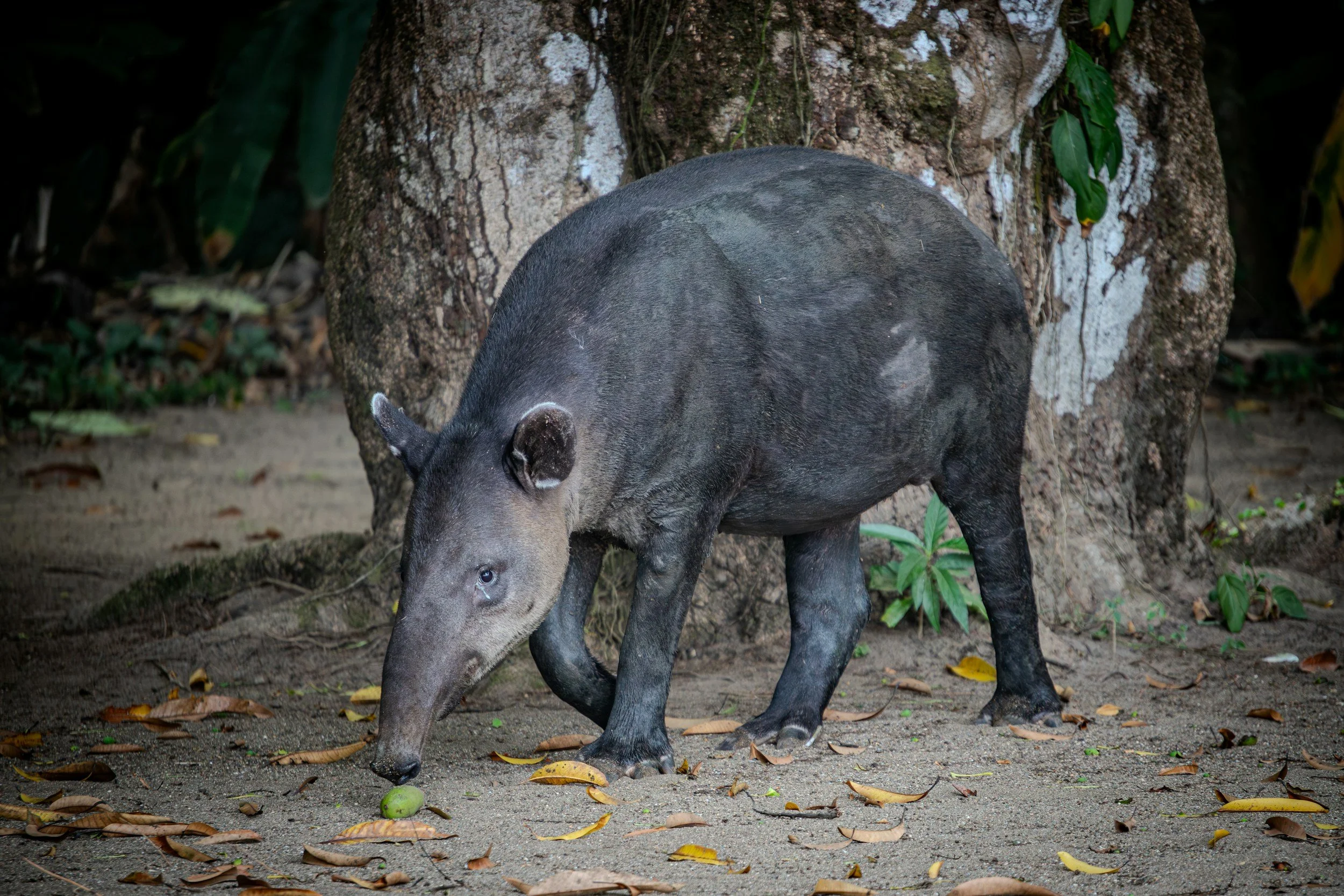
Baird's tapir is Belize's national animal, and it's recorded on the private reserve at Chan Chich, deep in the country's northwest.
The Ground a Tapir Needs
A tapir stays close to water and vegetation cover, and it moves mostly at night. Thirty thousand acres at Gallon Jug, in northwestern Belize, have been held as a private reserve since 1984, with a single lodge on the land, one gate on the road in, and no public traffic passing through. There's water running through it too: Laguna Verde, Laguna Seca, and Chan Chich Creek.
Where to see a Tapir at Chan Chich
The honest answer starts with where tapirs are actually recorded: the suspension bridge, one of the spots on the reserve where water and dense cover come together, exactly the conditions a tapir looks for. Because tapirs move mostly at night and stay close to water, your best opportunity is our night drive, the one outing that goes out specifically while nocturnal wildlife like the tapir is active.
We won't tell you a tapir will cross your path on any given night, nothing here is staged or guaranteed, and we'd rather be upfront about that than oversell it. But between the suspension bridge and the water sources nearby, that's where our guides and trail cameras have actually recorded them, and the night drive is your best shot at being in the right place while one is out and moving.
A Tapir captured on the Chan Chich Trail Cameras
What a Tapir Actually Is
In Belize, the Baird's tapir goes by another name: the mountain cow. It's the largest land mammal in Central America, and one of only four tapir species in the world.
A Baird's tapir looks like it was assembled from spare parts of other animals: a short, flexible snout, a heavy body set on short legs, and a calf born with white spots and stripes it keeps for its first few months of life. It browses at night on leaves and fruit.
The Baird's tapir is endangered across its entire range.
Belize's National Animal
The Baird's tapir is what's called an umbrella species, meaning it needs so much room to live that protecting its ground ends up protecting nearly everything else that shares it.
It eats fruit in one place and leaves the seed behind somewhere else, so new trees come up wherever it's walked. That's the argument for giving an animal like this the space it needs, and it's part of why thirty thousand acres held as one unbroken reserve actually matters.
World Tapir Day falls on April 27 every year.
What Else Is Out There
A tapir is one animal here, and the reserve holds a great deal more than that: the Escarpment, the organic farm, canoes out at sundown, and more than nine miles of maintained trails.
The Night Drive
The night drive is the departure that goes out while a tapir is awake: an hour and a half to two hours along private-reserve roads with no public traffic.
Nobody can promise you a tapir will cross that road on any given night, and we'd rather just say so plainly than oversell it. The drive goes out for everything else that's awake out there too.